

Why Fire-Safe Landscaping Matters for Your Property
Wildfires and urban fire risks are no longer remote concerns—they’re a growing reality for many large estates and HOA communities in Southern California. With wildfires burning 68% more acreage annually from 2017-2021 compared to previous decades and costing the U.S. economy up to $893 billion each year, the stakes for property managers and HOA boards have never been higher. Fire-safe landscaping plays a critical role in protecting buildings by reducing available fuel, slowing the spread of flames, and creating defensible space around structures. Thoughtful plant selection, proper spacing, and ongoing maintenance can significantly lower fire risk while still supporting an attractive, functional landscape.
Beyond safety, fire-safe landscaping is also a matter of compliance and long-term asset protection. Many jurisdictions now require defensible space standards, and insurance providers increasingly evaluate exterior risk factors when underwriting or renewing policies. Investing in fire-conscious landscape design helps safeguard people and property, supports regulatory compliance, and preserves property value in an environment where fire resilience is becoming essential—not optional.
Quick Answer: Core Fire-Safe Landscaping Practices
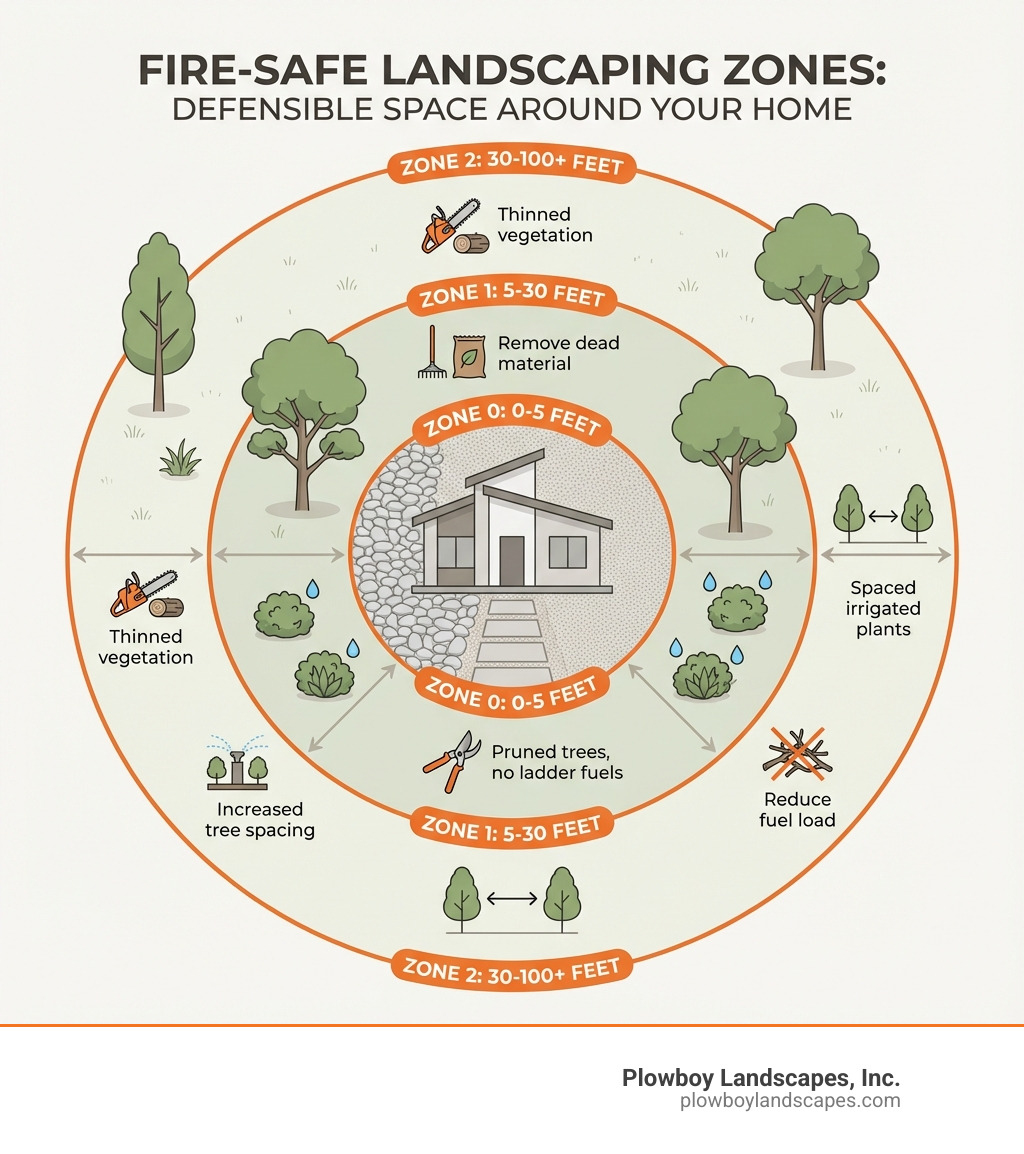
- Create three defensible space zones around all structures: 0-5 feet (non-combustible), 5-30 feet (lean and green), and 30-100+ feet (reduced fuel)
- Remove all combustible materials within 5 feet of buildings, including wood mulch, dead vegetation, and stored items
- Space trees and shrubs properly to prevent fire from spreading horizontally and climbing vertically (ladder fuels)
- Use fire-resistant plants with high moisture content and low resin in landscaped areas
- Maintain year-round by removing dead vegetation, cleaning gutters, and keeping grasses mowed to 4 inches or less
- Coordinate community-wide efforts for HOAs, ensuring common areas and property lines receive equal attention
Why This Matters Now
Research shows embers and small flames—not the main fire front—cause most home ignitions. These embers can travel over a mile, landing in vulnerable spots near homes. The 0-5 foot zone around a structure is the highest priority. Large estates must manage vast acreage and multiple buildings, while HOAs must coordinate across many properties and shared spaces. In both cases, a property is only as safe as its least-prepared neighbor.
Understanding Wildfire Threats and the Power of Defensible Space
Wildfires are an increasingly destructive force in Southern California and the Central Coast, with embers and radiant heat posing the greatest threats to homes. Fire-safe landscaping focuses on the Home Ignition Zone (HIZ)—the area up to 200 feet surrounding a property—where defensible space is crucial. By carefully managing vegetation and materials within this zone, large estates and HOA communities can reduce ignition risk, slow fire spread, and provide firefighters with a safer environment to protect structures.
The Primary Threats: Embers and Radiant Heat
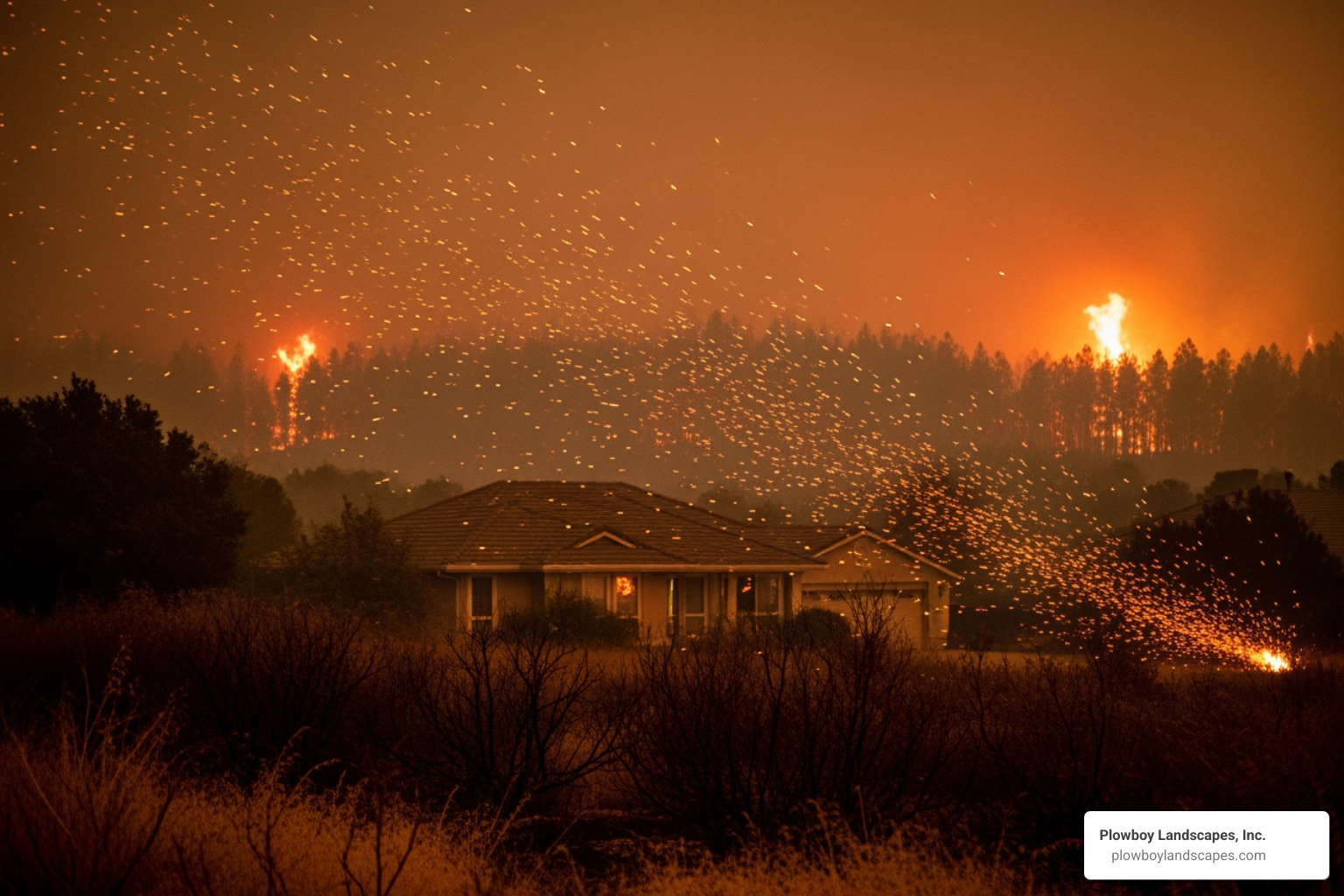
Research confirms that most homes ignite due to embers and small flames, not direct contact with the main fire. Embers are tiny, burning pieces of vegetation that wind can carry for over a mile. They land in gutters, on decks, or in flammable mulch, starting spot fires that ignite the home. Radiant heat is the other major threat. The intense heat from an approaching fire can shatter windows and ignite siding without any direct flame contact. These combined threats make proactive measures essential.
The economic impact is also staggering; a Congressional report on wildfire costs estimates an annual cost of $394 billion to $893 billion to the U.S. economy. Protecting property safeguards both lives and investments.
How Defensible Space Mitigates Wildfire Risk
Defensible space is a managed buffer zone that starves a fire of fuel, reducing its intensity and slowing its spread. It works by:
- Creating Fuel Breaks: Removing and modifying flammable vegetation creates gaps that fire struggles to cross.
- Reducing Fire Intensity: Less fuel means smaller flames and less radiant heat reaching your home.
- Slowing the Fire: A well-maintained space buys critical time for evacuation and emergency response.
- Providing Firefighter Access: It creates a safer area for firefighters to defend a home.
Homes with proper defensible space have a significantly higher chance of surviving a wildfire. At Plowboy Landscapes, we integrate these principles to create landscapes that are both beautiful and resilient. Learn more about our philosophy on More info about our approach to sustainable landscaping.
The Three Zones of Defensible Space: A Blueprint for Safety
Defensible space is a layered defense system with three zones, each crucial for protecting your property from embers, radiant heat, and direct flame. For large estates and HOAs in Ventura, Santa Barbara, and West L.A. counties, maintaining these zones around all structures is paramount.
Zone 0: The Immediate Zone (0-5 Feet)
This is the most critical area, extending 5 feet from all structures. It is the most vulnerable to embers and must be non-combustible.
- Use Non-Combustible Materials: The ground cover here must be rock, gravel, concrete, or pavers. Avoid flammable mulches like wood chips or bark entirely.
- Clear All Combustibles: Remove firewood piles (move 30+ feet away), flammable outdoor furniture, planter boxes, and trash bins from this zone.
- Clean Gutters and Roofs: Regularly remove all dead leaves and debris from roofs and gutters, which are prime spots for embers to land.
- Harden the Perimeter: Use 1/8-inch metal mesh to screen gaps under decks and ensure a 6-inch non-combustible space between the ground and your siding.
- Limit Vegetation: Ideally, this zone is free of plants. If you must have them, they should be low-growing, well-irrigated, and sparse.
For a deeper dive into these critical measures, refer to the FEMA guide to defensible space.
Zone 1: The Intermediate Zone (5-30 Feet)
This “Lean, Clean, and Green” zone extends from 5 to 30 feet. The goal is to reduce fuel and break up fire’s path.
- Keep Plants Lean and Green: Use irrigated, healthy plants arranged in small, separated “islands” to break up fuel continuity.
- Remove Ladder Fuels: Prune lower tree branches 6-10 feet from the ground and remove shrubs growing under trees to stop fire from climbing.
- Space Plants Properly: Ensure adequate horizontal space between shrubs (twice their height) and trees (10-15 feet between canopies).
- Maintain the Area: Regularly remove all dead plant debris and keep grasses mowed to 4 inches or less.
Maintaining this zone requires consistent effort. Our team at Plowboy Landscapes excels in comprehensive landscape maintenance programs. Find out more about our services here: More info about landscape maintenance.
Zone 2: The Extended Zone (30-100+ Feet)
Stretching from 30 to at least 100 feet from structures, this zone’s objective is to reduce the fuel load and slow an approaching wildfire.
- Reduce Fuel Load: Thin out dense vegetation and remove all dead or dying trees and shrubs.
- Maintain Grasses: Keep all grasses mowed to a maximum height of 4 inches.
- Space Trees: Ensure tree crowns are spaced at least 10-15 feet apart (more on slopes) to prevent fire from spreading through canopies.
- Use Fuel Breaks: Use driveways, roads, or hardscaped areas as strategic breaks in fuel.
Tailoring Fire-Safe Landscaping Practices for Large Estates and HOA Communities
Implementing fire-safe landscaping on large estates and within HOA communities requires specialized strategies due to the size of the properties and the number of stakeholders involved. Managing expansive landscapes and coordinating with multiple parties can be complex, but our experience across Ventura, Santa Barbara, and West L.A. counties has equipped us to deliver tailored solutions. See examples of our large-scale projects and how we help communities reduce wildfire risk while maintaining beautiful, functional grounds.
Key Fire-Safe Landscaping Practices for Large Estates
Large estates often border wildlands and have multiple structures, requiring a comprehensive approach.
- Manage All Acreage: Extend fuel reduction treatments beyond the 100-foot zone, creating broad fuel breaks across the property.
- Protect All Structures: Every building, from guesthouses to sheds, needs its own three defensible space zones.
- Secure Property Lines: Establish robust fuel breaks along borders, especially if adjacent to undeveloped land.
- Ensure Emergency Access: Keep private roads wide (20 ft min), clear of vegetation (10 ft on each side), and with adequate turnarounds for fire trucks.
- Provide Water Sources: Make hydrants, pools, or wells accessible for firefighting personnel.
Our landscape construction team is adept at designing and implementing these large-scale fire-safe features. Learn more about our construction capabilities at More info about landscape construction.
Effective Fire-Safe Landscaping Practices for HOA Communities
HOAs require a coordinated, community-wide approach to fire safety due to shared spaces and higher density.
- Update Governing Documents (CC&Rs): Enshrine clear, enforceable defensible space guidelines for both private lots and common areas.
- Maintain Common Areas: Apply rigorous fire-safe maintenance to all shared greenbelts, parks, and open spaces, as these are often overlooked fuel sources.
- Address Structure-to-Structure Ignition: In dense communities, collaboration on property lines is vital to prevent fire from spreading between homes.
- Create Communal Defensible Space: Where lots are small, work with neighbors to create a shared buffer zone across property lines.
- Hire Professional Maintenance: Partner with a qualified vendor like Plowboy Landscapes to ensure expert, consistent application of fire-safe practices throughout the community.
Building a Fire-Resistant Landscape: Plants, Mulch, and Hardscaping
A fire-resistant landscape can be beautiful. The key is making informed choices about plants, mulch, and hardscaping to create a space that is both stunning and safe.
Choosing the Right Fire-Resistant Plants
No plant is fire-proof, but fire-resistant plants are less likely to ignite. Look for plants with high moisture content, low-growing habits, and low sap or resin content. They should not accumulate dead material and should have an open structure. In general, healthy, well-watered deciduous trees are more resistant than evergreens.
Many native and drought-tolerant plants in our region, like succulents and certain perennials, fit these criteria. However, proper maintenance and placement are more critical than the specific species. For detailed guidance, see the UC ANR guide on fire-resistant plants.
The Role of Mulch and Hardscaping
Mulch can be a fire hazard, while hardscaping is a powerful defense.
- Mulch: Avoid combustible mulches (wood chips, bark) within 30 feet of structures (Zone 0 and 1). Opt for non-combustible options like rock, gravel, or decomposed granite. These materials act as a fuel break.
- Hardscaping: Use elements like concrete pavers, flagstone patios, and walkways to create definitive fuel breaks. These features are excellent for dividing planting beds into smaller, safer “islands.”
Balancing Aesthetics with Wildfire Safety
Fire-safe landscaping does not have to be barren. With thoughtful design, we create vibrant, resilient spaces by using strategic plant groupings, leveraging the color and texture of fire-resistant plants, and designing beautiful, safe outdoor living areas with non-combustible materials. Professional landscape design is key to blending award-winning aesthetics with an unwavering commitment to fire safety, ensuring your property’s value is improved through both beauty and resilience.
Year-Round Management, Community Action, and Structural Hardening
Effective wildfire protection goes beyond seasonal maintenance—it requires a comprehensive, year-round approach that combines proactive landscape management, coordinated community action, and structural hardening of buildings. By maintaining defensible space throughout the year, fostering collaboration among neighbors and HOA boards, and reinforcing homes with fire-resistant materials, property owners can dramatically reduce wildfire risk while protecting both lives and assets.
Creating a Year-Round Maintenance Plan
The threat of fire in Southern California is year-round, requiring continuous vigilance.
- Regular Maintenance: Consistently prune plants to remove ladder fuels, maintain spacing, and weed to reduce fine fuels.
- Debris Removal: Weekly, clear leaves and debris from roofs, gutters, and under decks.
- Irrigation Checks: Ensure irrigation systems are working properly to keep plants hydrated and less flammable.
- Pre-Season Prep: Before peak fire season, conduct a thorough property assessment to mitigate any new risks.
We offer comprehensive maintenance programs to handle these critical tasks. Learn more about our approach to year-round care at Seasonal landscaping maintenance priorities.
Frequently Asked Questions about Fire-Safe Landscaping
Fire-safe landscaping is essential for protecting large estates and HOA communities from the increasing threat of wildfires in Southern California and the Central Coast. From selecting fire-resistant plants to creating defensible space and managing vegetation within the Home Ignition Zone, there are many strategies property owners can use to reduce risk. This FAQ section answers common questions about fire-safe landscaping, offering practical guidance to help communities plan, implement, and maintain resilient landscapes year-round.
Can a fire-safe landscape still be beautiful?
Absolutely! This is one of the most common misconceptions. At Plowboy Landscapes, we specialize in creating stunning, award-winning landscapes that seamlessly integrate fire-safe principles. We use strategic plant selection, thoughtful design, and hardscaping to create vibrant, inviting outdoor spaces that are also highly resilient to wildfire threats. You don’t have to choose between beauty and safety; you can have both.
What is the single most important action for creating a fire-safe property?
If you can only do one thing, focus on Zone 0: The Immediate Zone (0-5 feet) around your home and any outbuildings. Research consistently shows that embers are the primary cause of home ignitions, and this zone is where they pose the greatest threat. Remove all combustible materials—including wood mulch, dry vegetation, and stored items—from this critical area and replace them with non-combustible options like rock or concrete. This single action drastically reduces the likelihood of your home igniting from ember attack.
Partner with Experts for Year-Round Peace of Mind
The sheer complexity and scale of maintaining large properties—be it a commercial center, an HOA, or a private estate—underscore the invaluable role of professional expertise. Attempting to manage such an intricate system without dedicated resources can quickly lead to overwhelming challenges, costly mistakes, and diminished property appeal.
Plowboy Landscapes: Your Partner in Beautiful, Sustainable Outdoor Spaces
If you’re ready to transition your large commercial property—or want a more reliable maintenance partner—Plowboy Landscapes is here to help.
For 55 years, we’ve specialized in maintaining large-scale properties across Santa Barbara, Ventura County, the Central Coast, and the San Fernando Valley. Our dedicated full-time gardeners, decades of expertise, and commitment to environmental integrity set us apart from standard maintenance crews.
Whether you want to improve water efficiency, overhaul outdated landscaping, or create a more sustainable long-term plan, we bring the skill and consistency needed to maintain large properties the right way.
Call us today: (805) 643-4966