

Why Bringing Commercial Landscapes Back to Life After Winter Matters More Than You Think
Winter can be unforgiving on commercial landscapes. Months of cold temperatures, heavy precipitation, and reduced sunlight often leave properties looking worn, patchy, and uninspired. For commercial property owners and managers, this seasonal decline isn’t just an aesthetic concern—it can directly impact tenant satisfaction, customer perception, and overall property value. As spring arrives, it presents a critical opportunity to reverse that damage and reestablish a landscape that reflects professionalism, care, and attention to detail.
Bringing commercial landscapes back to life after winter requires more than a quick cleanup. It’s a strategic process that involves assessing winter damage, revitalizing plant health, restoring turf, and ensuring irrigation systems are functioning efficiently. With the right approach, properties can transition from dormant and dull to vibrant and inviting, setting the tone for a successful season ahead while reinforcing a strong first impression for everyone who visits.
Here’s a quick overview of what it takes:
- Clear debris and assess damage – Remove branches, dead foliage, and salt residue before growth begins
- Address soil and turf issues – Aerate compacted soil, repair bare patches, dethatch, and overseed
- Treat salt and de-icer damage – Apply gypsum and leach soil to neutralize chemical buildup
- Prune trees and shrubs – Remove deadwood, improve structure, and promote healthy regrowth
- Restart irrigation and inspect hardscapes – Check for leaks, frost heave, cracked pavement, and drainage issues
- Fertilize and refresh beds – Apply slow-release fertilizer, refresh mulch, and plant seasonal color
Immediate Steps for Bringing Commercial Landscapes Back to Life After Winter
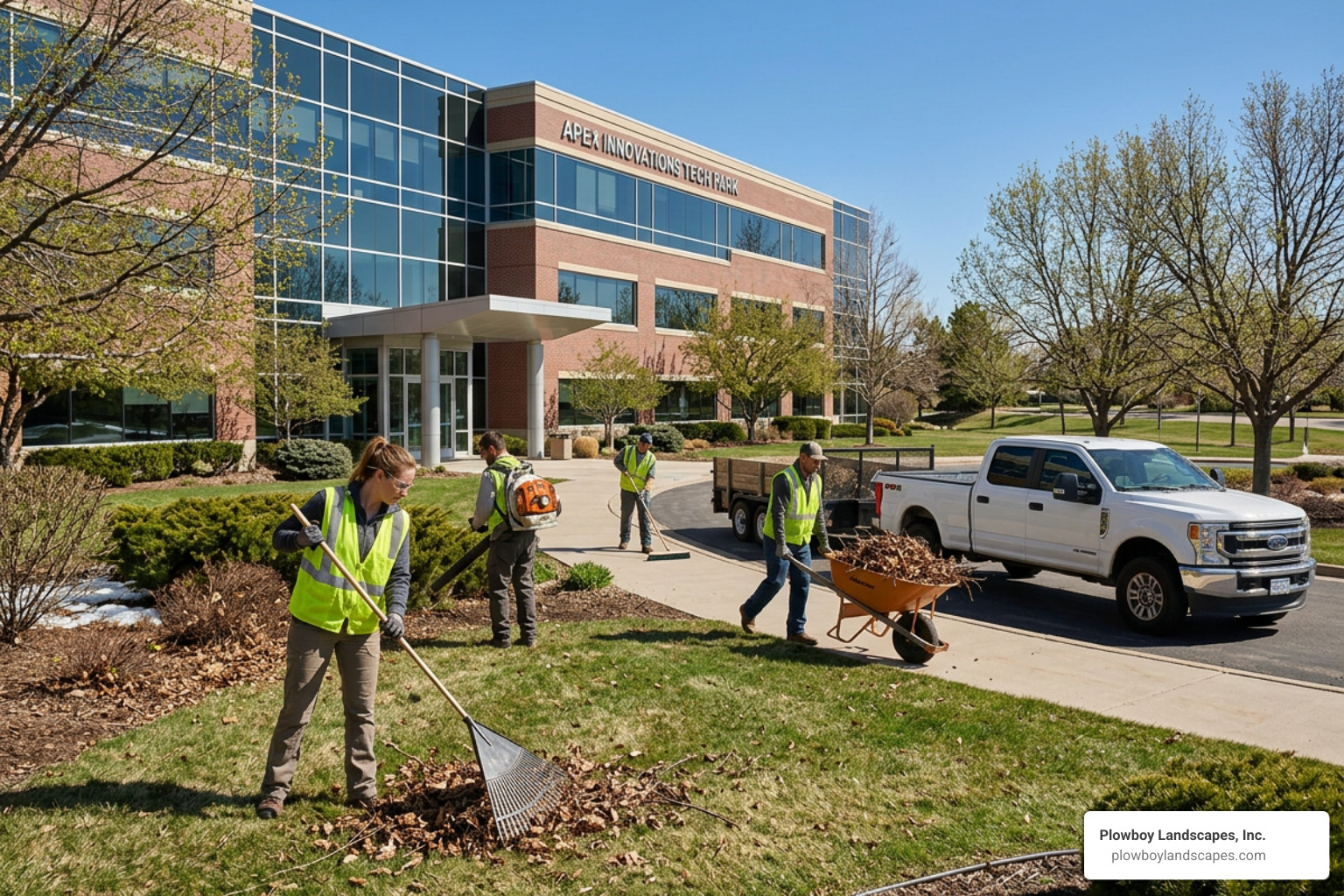
In regions like Ventura, Santa Barbara, and the San Fernando Valley, “winter” might not always involve five feet of snow, but the season still leaves its mark. Between heavy rainstorms, wind events, and occasional frost, your property can end up looking a bit “weathered.” The very first step in bringing commercial landscapes back after winter is a thorough debris cleanup and a cold, hard look at the damage.
We start by clearing away fallen branches, wind-dispersed litter, and any matted leaves that survived the winter. Leaving wet leaves on the ground isn’t just an eyesore; it’s a liability. Wet leaves are incredibly slippery for pedestrians and can lead to legal problems for property owners if a slip-and-fall occurs. Furthermore, thick layers of debris can smother turf and trap moisture, inviting fungal diseases like snow mold or root rot before the sun even has a chance to warm the soil.
Once the “canvas” is clear, we perform a comprehensive site audit. This involves walking every inch of the property to distinguish between standard maintenance needs and storm-related damage that might require specialized remedies. We look for:
- Wind Damage: Cracked or hanging limbs in mature trees.
- Frost Burn: Browned edges on sensitive tropical or ornamental plants.
- Salt Residue: If you are near the coast in Ventura or Santa Barbara, salt spray can be just as damaging as de-icing salts used in colder climates.
- Drainage Issues: Identifying where standing water has pooled, which indicates soil saturation or blocked drains.
For managers of large facilities, this is the time to lean on Maintenance Services Programs to ensure nothing is missed. A professional audit early in the season prevents minor issues from ballooning into mid-season capital expenses.
Addressing Soil Compaction When Bringing Commercial Landscapes Back to Life After Winter
One of the “invisible” enemies of a healthy spring landscape is soil compaction. During the winter, soil becomes densely packed due to heavy rainfall, foot traffic, and the sheer weight of any snow or standing water. Compacted soil is essentially “suffocating” the roots of your grass and plants, preventing oxygen, water, and nutrients from reaching where they are needed most.
We address this through core aeration. By removing small plugs of soil, we create “breathing room” for the root system. This process is critical for commercial properties that see high foot traffic. Aeration also improves the effectiveness of your Water Management Strategies for Commercial Landscapes, as it allows irrigation to penetrate deeper into the earth rather than just running off the surface.
Mitigating Salt and De-icer Damage
While Southern California doesn’t rely on the heavy applications of rock salt common in colder regions, many commercial properties still contend with de-icers during occasional frost events, as well as ongoing exposure to coastal salt spray. Even in smaller quantities, salt can act as a “silent killer” within the landscape. It disrupts the natural balance of the soil, drawing moisture away from plant roots and creating what is often referred to as a “chemical drought,” where plants are unable to absorb the water they need to survive and thrive.
Over time, this damage can present itself in subtle but costly ways—leaf burn, stunted growth, thinning turf, and overall plant decline. Left unaddressed, salt buildup can degrade soil structure and reduce the long-term health of planting beds. To mitigate these effects, it’s essential to implement proactive strategies in early spring, such as deep soil flushing, soil amendments to restore balance, and selecting salt-tolerant plant varieties in high-risk areas. With proper attention, commercial properties can recover more quickly from winter stress and maintain a healthier, more resilient landscape throughout the year.
Restoring Turf Health and Soil Vitality
A lush, green lawn is the hallmark of a well-maintained commercial property. It signals professionalism and care to every tenant and visitor. However, after a long winter, turf often looks patchy, brown, or thin.
We always recommend starting with a soil test. You wouldn’t take medicine without a diagnosis, and you shouldn’t fertilize without knowing what your soil actually lacks. A soil test tells us the pH balance and nutrient levels, allowing us to tailor our replenishment strategy. At Plowboy Landscapes, we prioritize sustainable, organic garden maintenance, which focuses on building long-term soil vitality rather than just providing a temporary “green-up.”
| Feature | Organic Slow-Release Fertilizer | Synthetic Quick-Release Fertilizer |
|---|---|---|
| Nutrient Delivery | Steady, long-term feeding | Immediate, short-term burst |
| Soil Health | Improves soil structure & microbes | Can lead to salt buildup over time |
| Environmental Impact | Low runoff risk, sustainable | Higher risk of leaching into groundwater |
| Application Frequency | Less frequent | More frequent |
Dethatching is another vital step. If your lawn has a thick layer of dead grass (thatch) between the green blades and the soil, it acts like a waterproof tarp, preventing nutrients from reaching the roots. We use specialized equipment to “rake” out this thatch, followed by repairing bare patches.
Overseeding and Fertilization Strategies
If your turf looks thin, overseeding is the answer. We use high-quality, climate-suited seed mixes (such as Tall Fescue or drought-tolerant blends) that are designed to thrive in the Santa Barbara and Ventura climates. We use broadcast spreaders to ensure even coverage, followed by a light raking to ensure seed-to-soil contact.
Timing is everything. You want to overseed when the soil temperature reaches about 50-60 degrees Fahrenheit. This coincides with our early spring fertilization, where we apply a balanced, slow-release formula rich in nitrogen to support vigorous leaf growth. This “one-two punch” of seed and feed helps with weed suppression, as a thick, healthy lawn naturally crowds out opportunistic weeds.
Managing Disease and Pests During Early Spring Recovery
Winter moisture creates the perfect breeding ground for fungal diseases. Snow mold, which appears as circular patches of matted, discolored grass, can occur even in milder climates if the turf remains wet and cold for extended periods.
Early intervention is key to preventing these issues from spreading. We utilize Integrated Pest Management to monitor for grubs and fungal patches. By catching disease early, you avoid Early Plant Disease, which often involves expensive total turf replacement. We also apply pre-emergent herbicides in early spring to stop crabgrass and other weeds before they even germinate.
Pruning and Plant Care for Spring Regrowth
Pruning isn’t just about “tidying up”—it’s a surgical intervention that dictates how your plants will grow for the rest of the year. During the transition from winter to spring, many trees and shrubs are still in a semi-dormant state, making it the ideal time to prune for structural integrity.
We focus on removing “The Three Ds”: dead, damaged, and diseased wood. Winter storms can leave branches cracked or weakened; removing these now prevents them from falling unexpectedly later. Proper pruning also improves airflow and sunlight penetration, which are essential for preventing pest infestations.
Strategic cuts, known as rejuvenation pruning, can also be used on overgrown shrubs to encourage a fresh flush of healthy, green growth. It’s a critical part of Long-Term Plant Health. If your property requires more significant changes, such as removing old specimens or installing new beds, our Landscape Construction team can help redesign the space for better long-term performance.
Sustainable Enhancements for Bringing Commercial Landscapes Back to Life After Winter
Sustainability is at the heart of everything we do. When refreshing your planting beds, we recommend maintaining a mulch depth of 2 to 3 inches. Mulch is a “workhorse” in the landscape: it regulates soil temperature, suppresses weeds, and retains moisture. However, we must avoid “mulch volcanoes”—piling mulch against tree trunks—as this can lead to rot and pest issues.
We also advocate for the use of native species and drought-tolerant perennials. These plants are adapted to our local environment, meaning they require less water and maintenance while providing vital pollinator support. Adding seasonal blooms, like California Poppies or native Sage, provides instant curb appeal and supports local biodiversity. For a full breakdown of what to do each month, refer to our Seasonal Landscaping Maintenance Priorities for Large Properties: A Month-by-Month Breakdown.
Irrigation Startup and Hardscape Safety Audits
Your irrigation system has likely been off or on a reduced schedule during the winter. You cannot simply “flip the switch” and hope for the best. A professional irrigation audit is a non-negotiable part of Bringing Commercial Landscapes Back to Life After Winter.
We check for:
- Leaks and Line Breaks: Winter ground shifts or root growth can crack pipes.
- Clogged Nozzles: Debris often finds its way into sprinkler heads during the off-season.
- Smart Controller Settings: We update schedules to reflect the warming weather and ensure we are complying with local water restrictions.
- Targeting: Ensuring water is hitting the plants, not the parking lot or building walls.
While the irrigation is being tested, we also perform a hardscape safety audit. Winter rains and freeze-thaw cycles can cause “frost heave” or settle the ground under pavers and concrete. We look for trip hazards, cracked walkways, and clogged drainage systems. Pressure washing walkways and patios is the final touch, removing salt residue, moss, and grime to ensure a clean, professional appearance.
Plowboy Landscapes: Your Partner in Beautiful, Sustainable Outdoor Spaces
Bringing commercial landscapes back to life after winter is more than just a spring cleaning; it’s an investment in your property’s long-term resilience and value. By taking proactive steps now—clearing debris, healing the soil, pruning with purpose, and auditing your systems—you ensure your landscape remains a brand asset rather than a liability.
For 55 years, we’ve specialized in maintaining large-scale properties across Santa Barbara, Ventura County, the Central Coast, and the San Fernando Valley. Our dedicated full-time gardeners, decades of expertise, and commitment to environmental integrity set us apart from standard maintenance crews.
Whether you want to improve water efficiency, overhaul outdated landscaping, or create a more sustainable long-term plan, we bring the skill and consistency needed to maintain large properties the right way.
Call us today: (805) 643-4966
Email any questions to: office@powboylandscapes.com